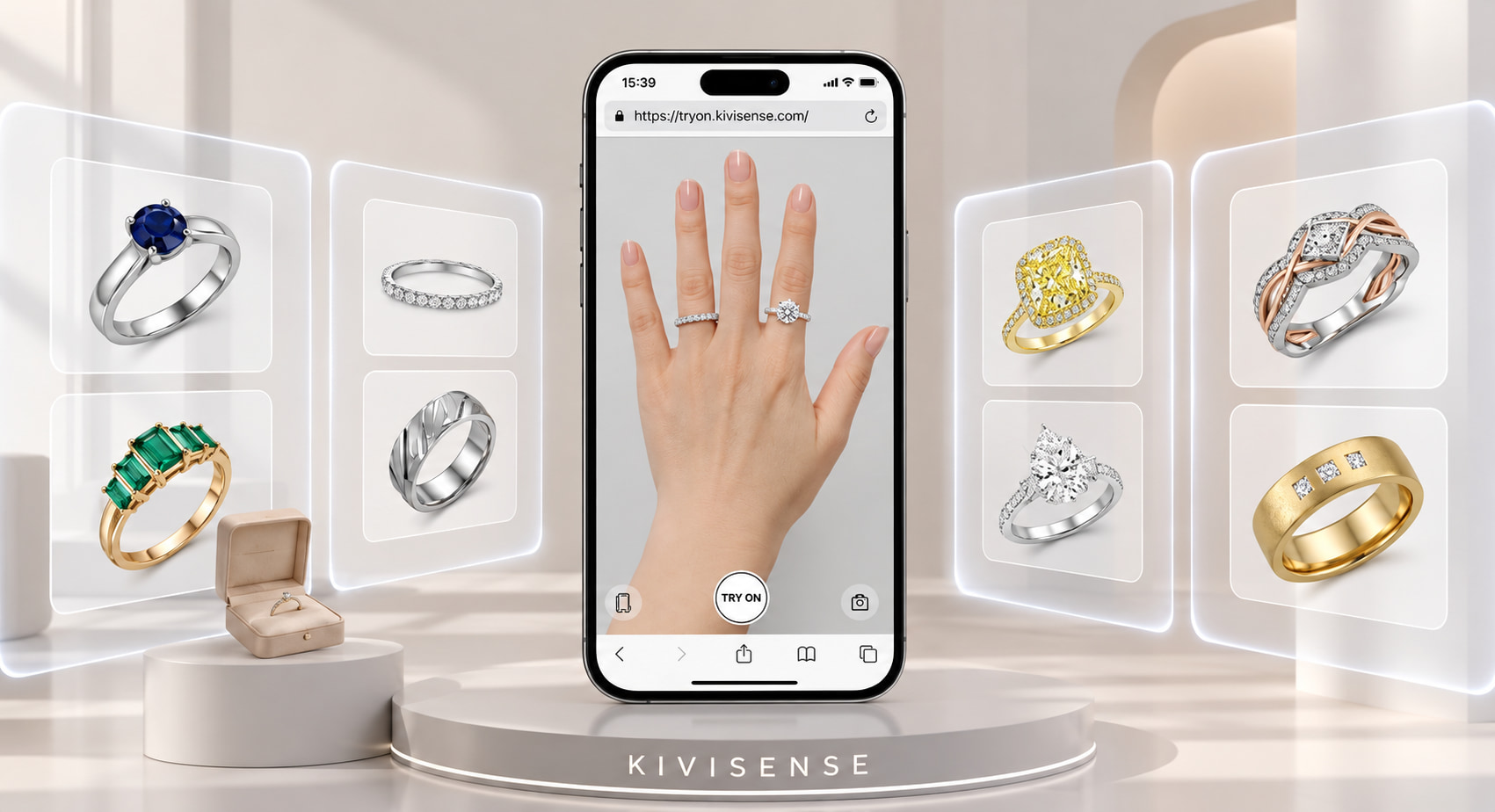
What if you want to stand out from your competition and attract more consumers to purchase? Virtual ring try-on is one of the most effective methods for jewelry brands and businesses to use. Whether you sell online or in physical stores, ring virtual try-on allows customers to see how different rings look on their hands and help them make more confident purchasing decisions.
So how does ring virtual try-on work for jewelry brands? In the following content, we’ll discuss the technologies of virtual ring try-on, talk about real-world examples to help brands explore the forefront of the jewelry industry, and devise new strategies for their own ring brand.
What Is Virtual Ring Try-On?
Virtual ring try-on is an experience that allows customers to see how different rings look on their fingers without physically wearing them. Since rings often involve personal preferences regarding design, size, and materials, customers typically want to try on and compare different styles before making a purchase. While 3D product visualization allows shoppers to inspect a ring from different angles, it doesn’t necessarily show how the design will look when worn. That’s where virtual ring try-on comes in.
By making the ring shopping experience more engaging with ring virtual try-on, brands and businesses can encourage consumer interaction with ring products and bring more shoppers closer to purchase. For example, after introducing virtual ring try-on on its e-commerce website, Yadav Jewelry achieved a 33% increase in its overall conversion rate. The tested product page also recorded a 50% increase in engagement and a 149% increase in page value.
3 Types of Virtual Ring Try-On
Virtual ring try-on brings digital rings onto a customer’s hand, but the technology behind the experience can vary. Depending on how the ring is captured and displayed, businesses can offer different try-on modes to suit their customers’ shopping preferences. Commonly, there are 3 modes to virtually try on rings, including live try-on, AR try-on, and photo-based try-on. Here are the working principles of each.
Live Try-On: How to virtually try on rings? With this mode, people can start a real-time ring try-on online experience. When people rotate their hands, the virtual rings adjust to follow their movements. The camera will automatically capture their hands, then analyze the position and gestures with AI and naturally add the rings.
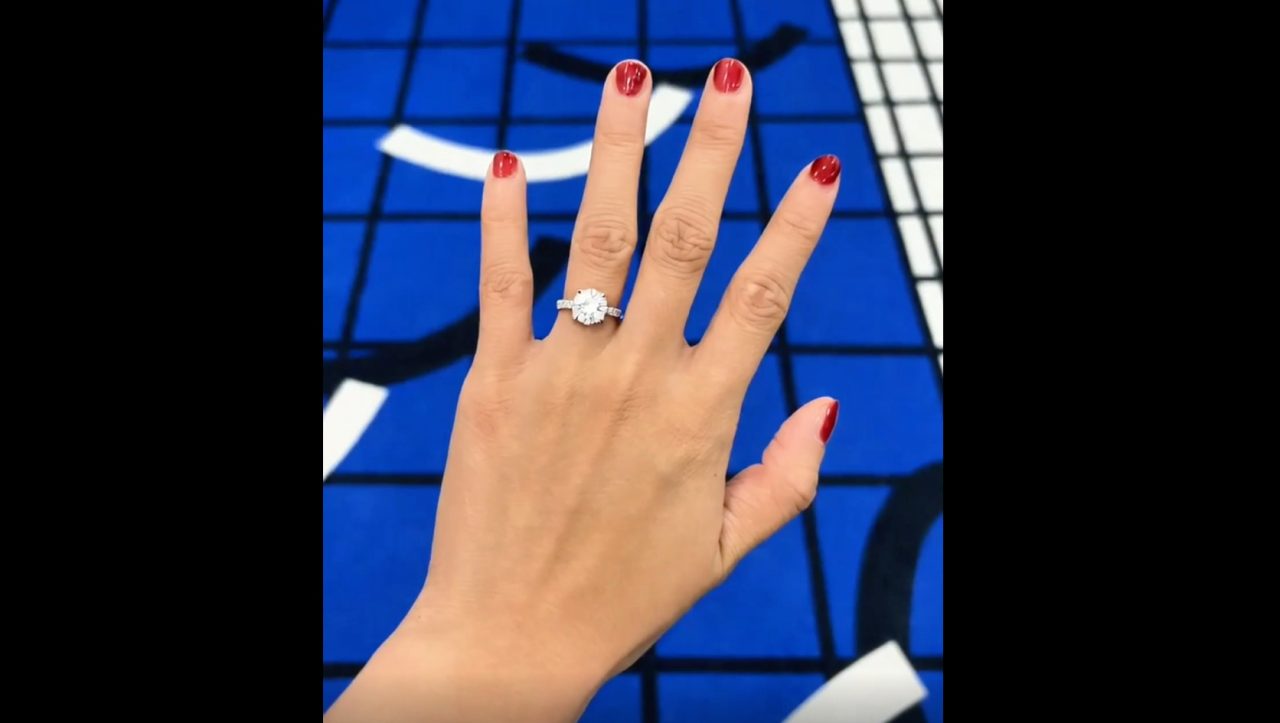
AR Try-On: In the case of AR try-on, the pre-made 3D ring models are overlaid onto the selected finger using a pre-defined model. When the finger moves around, the tracking algorithm keeps the augmented reality rings aligned to its position and orientation. Then the rendering engine applies lighting and material properties to give the ring a realistic look.
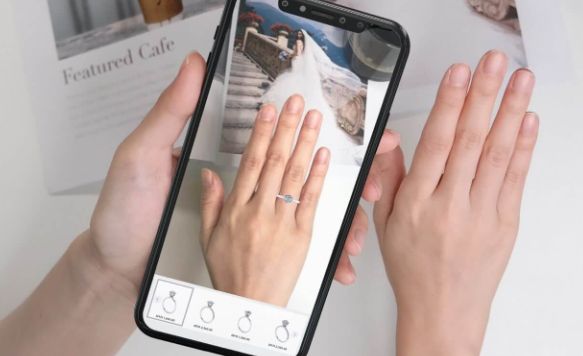
Photo Try-On: This is another common method of online ring try-on. Shoppers can take a photo or upload one from their devices to see what the rings look like on their fingers within an image. Unlike live try-on and AR try-on, this method generates a static image rather than providing an interactive, real-time experience.
How Virtual Ring Try-On Matters for E-Commerce & Retailers
For jewelry businesses, virtual ring try-on offers more than an interactive shopping experience. It also creates new opportunities for them to improve product presentation and support sales. Here are some benefits for businesses to apply virtual ring try-on.
1. Increase Customer Engagement
The traditional method of purchasing rings online is greatly dependent on product images, which do not provide a view of how the ring will look when worn on a customer’s hand. The lack of such an experience can make comparison hard for customers. With virtual try-on, however, consumers can get a feel for how the rings will appear on their fingers.
2. Increase Sales Conversion Rate
The virtual ring try-on helps shoppers understand how different ring designs look on their fingers and feel more confident while choosing products. Online retailers can integrate virtual try-on into product pages, while brick-and-mortar stores can use it as part of their digital product displays.
3. Reduce Returns and Improve Consumer Satisfaction
A ring’s appearance in a virtual preview may differ from what customers expect based on standard product photos alone. Ring try-on lets them see how a particular ring will look on their finger, so they can then make more informed purchasing decisions.
4. Save Customers’ Time
Sometimes, waiting in line for a long time in jewelry shops may discourage customers from making purchases. However, virtual ring try-ons provide an alternative solution where people get to try out various ring designs without having to wait. Customers can conveniently look at a variety of rings right from their smartphones and other display devices in stores.
5. Increase Brand Awareness
Jewelry brands often face challenges in engaging younger consumers, particularly Gen Z shoppers. Through a virtual ring try-on, brands can provide an interactive shopping experience that aligns with the digital habits of younger consumers. Customers can try on various ring designs at home and post their experiences on social platforms.
6. Reduce Inventory Pressure
For luxury jewelry brands, maintaining a large inventory of high-value rings can involve high costs. Virtual ring try-on offers a way to showcase a wider range of designs without requiring every style to be physically stocked or displayed in each store.
Virtual Ring Try-On Use Cases for Jewelry Businesses
Virtual ring try-on applies to various jewelry categories. From engagement and wedding rings to personalized designs, it gives shoppers a clearer view of different styles before making a purchase. Here are 4 common use cases for jewelry businesses.
Use Case 1. Virtual Engagement Ring Try-On
A virtual engagement ring simulator allows users to see how various engagement ring designs appear when worn on the finger. It allows shoppers to compare details such as center stone size, setting styles, and band designs.
Use Case 2. Virtual Wedding Ring Try-On
Shoppers can not only explore different wedding band designs and metal finishes but also compare how matching bands or individual rings look on their hands.
Use Case 3. Diamond Ring Virtual Try-On
Diamond ring virtual try-on lets customers preview different diamond shapes, sizes, and settings. So shoppers will have a better idea of how each combination affects the overall appearance of a diamond ring.
Use Case 4. Custom Ring Try-On
Consumers can try out different designs before getting a custom ring. They can explore different settings, gemstones, and design details to create a ring that reflects their personal preferences.
Real-World Examples of Virtual Ring Try-On Projects
Virtual ring try-on is already being used in the jewelry industry to create more interactive shopping experiences. The following examples show how jewelry brands use this technology to showcase their products and improve the online shopping experience.
Example 1. REZA Live Ring Try-On
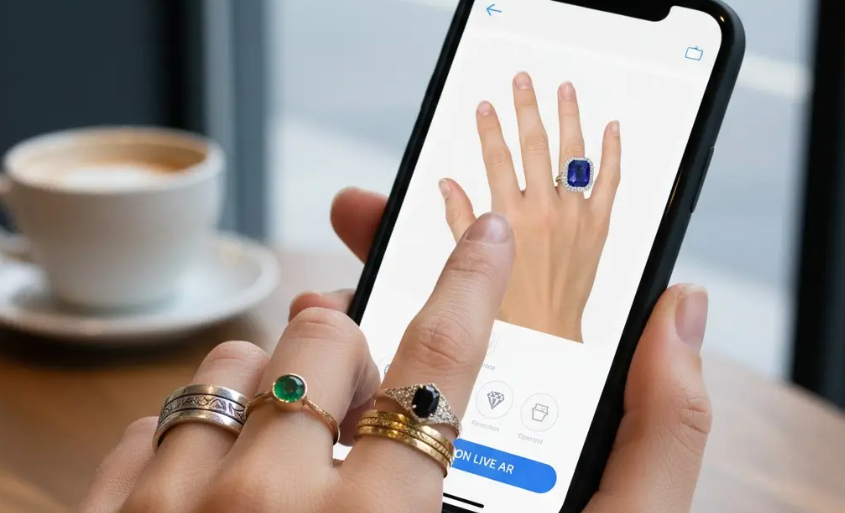
REZA launched an interactive virtual try-on experience on WORLDOFREZA.COM. Powered by AgileHand technology, the solution uses AI and AR to map customers’ hands and track real-time movements. Its 3D rendering technology reproduces the appearance of different jewelry materials and finishes, allowing shoppers to preview rings and other accessories online with realistic visual details.
Example 2. Tiffany & Co. AR Ring Try-On
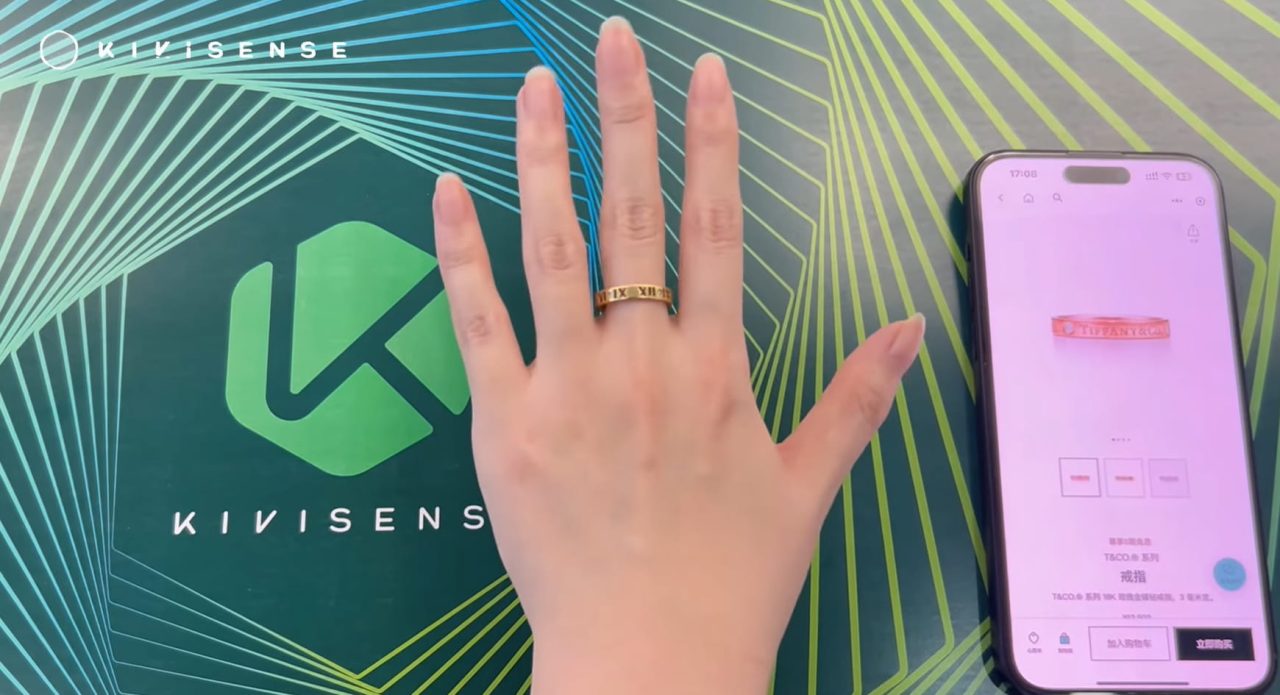
Tiffany & Co. worked with Kivisense to bring 3D product displays and AR ring try-on to its WeChat Mini Program and JD product pages. Shoppers can rotate 3D diamond ring models to examine their details, then use static or real-time AR try-on features to preview how the jewelry looks on their hands.
Example 3. Chaumet Virtual Ring Try-On
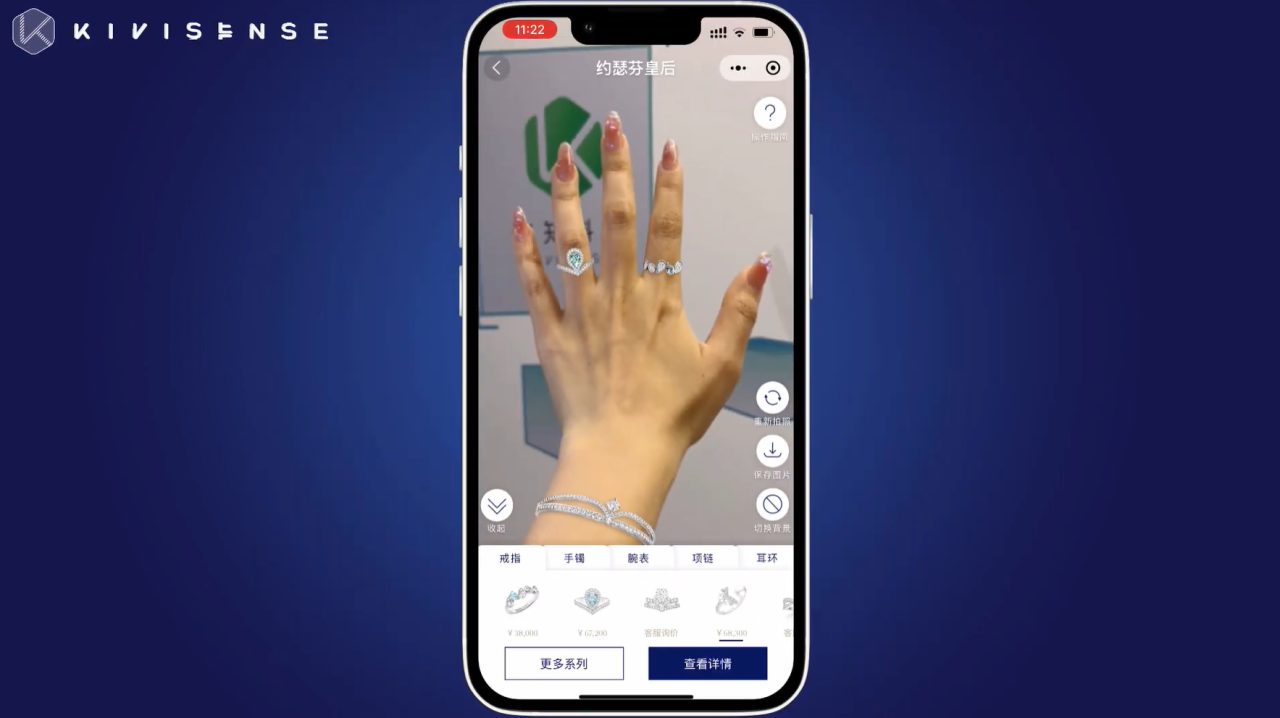
French luxury jewelry brand Chaumet offers an AR ring try-on experience powered by Kivisense. Shoppers can select engagement rings from its collection and use their smartphone cameras to preview each design on their hands in real time. The 360-degree visualization provides a closer look at how different rings appear when worn.
Example 4. Pomellato Virtual Ring Try-On
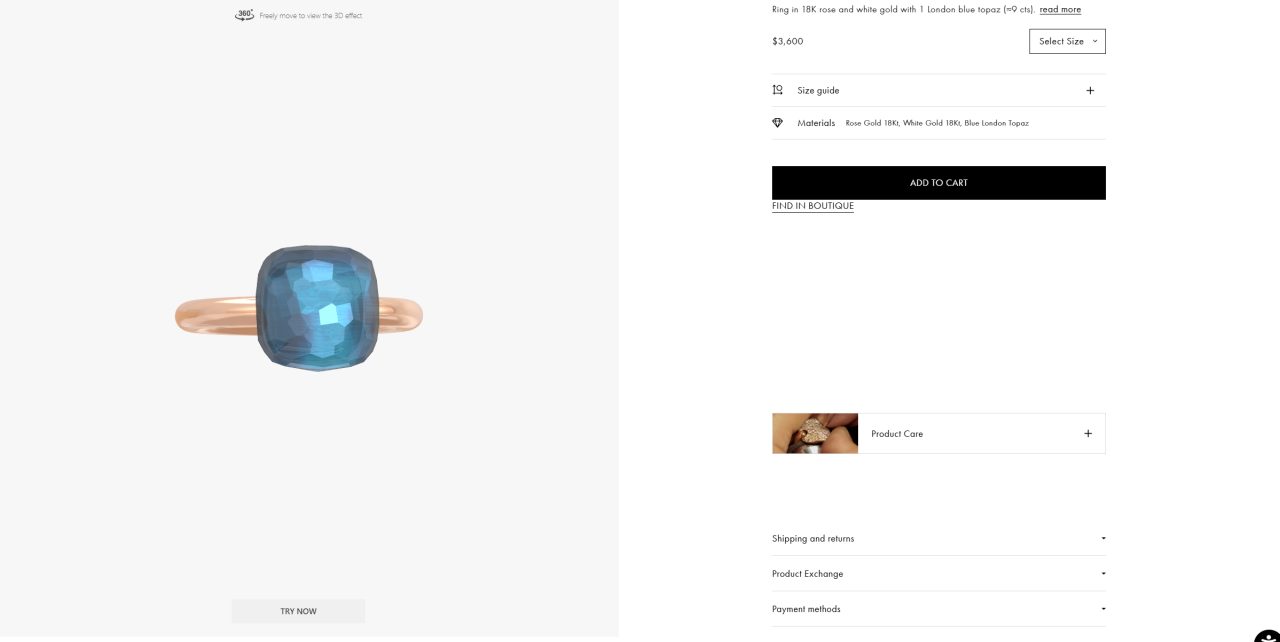
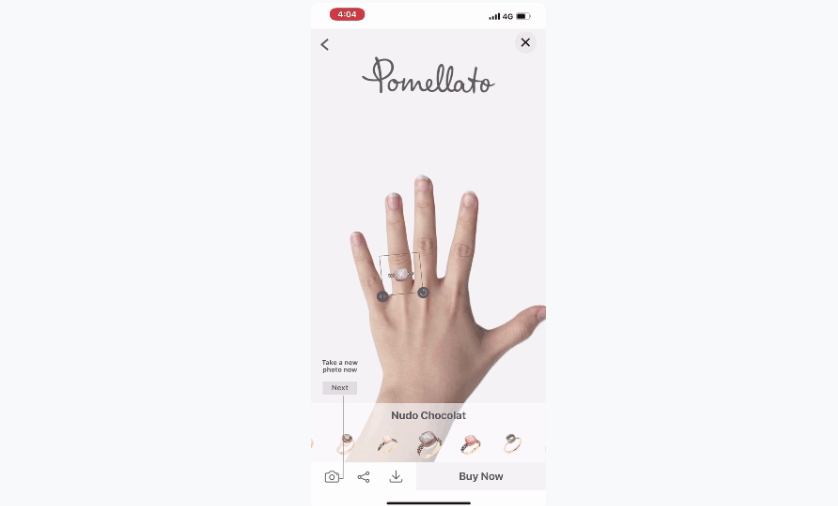
Working together with Kivisense, Pomellato integrates virtual ring try-on into its online product pages, allowing shoppers to explore how its signature designs look when worn. For example, the Nudo Classic Ring product page features a Ring Try-On option. Customers can use this feature to visualize the ring, which combines 18K rose and white gold with a London blue topaz, on their own hand before making a purchase.
How to Implement a Custom Virtual Ring Try-On Project
Creating a try-on experience for rings goes beyond implementing an AR capability on a product page. Here are the common steps to implement a custom virtual ring try-on project.
1. Define Business and Technical Requirements
The first step for a virtual ring try-on project is to determine what kind of rings your customers should try on, such as engagement rings. Think about your desired try-on mode based on your target consumers and marketing channels.
2. Prepare 3D Models and Product Assets
For traditional AR ring try-on, each ring requires a corresponding 3D model that accurately represents its shape, proportions, gemstones, and material finishes. Other visuals, such as product images, can also be required. However, Kivisense offers customized virtual try-on solutions that simplify asset preparation, so businesses do not necessarily need to build every ring model from scratch.
3. Develop the Virtual Try-On Experience
When all of the product assets have been prepared, the development team creates the ring try-on experience based on the requirements, including hand and finger tracking, 3D ring rendering, and interactive features that let shoppers switch between different designs.
Note: High-quality rendering and accurate tracking are essential for keeping virtual rings aligned with users’ fingers as their hands move.
4. Integrate and Test the Virtual Ring Try-On Solution
Finally, integrate virtual try-on into e-commerce websites or platforms. Before launch, test the solution across different mobile devices, web browsers, and lighting conditions to ensure consistent performance.